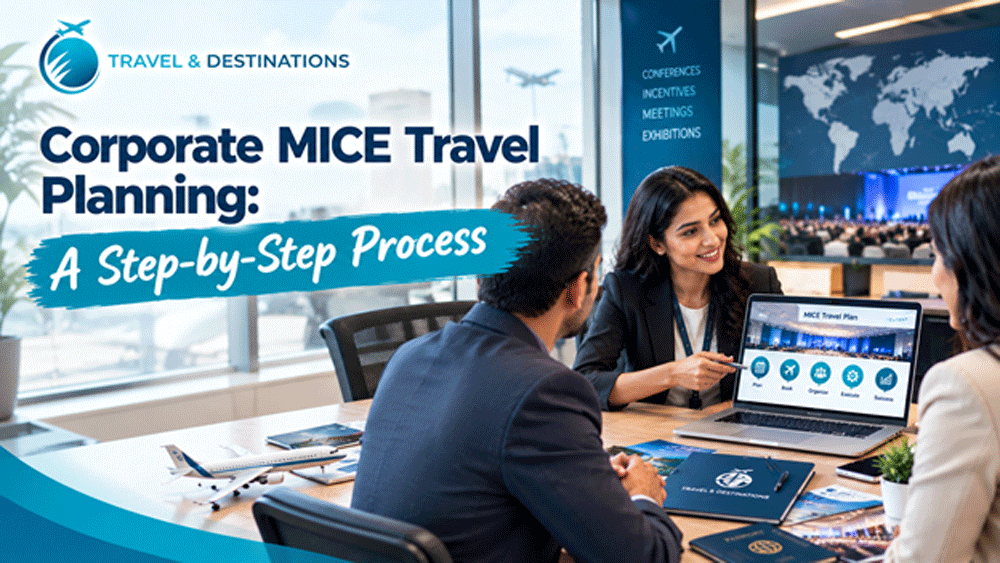
Corporate MICE Travel Planning: A Step-by-Step Process
A Chennai manufacturer once planned a two-day dealer conference in Kochi for 140 people without anyone writing down what the event was supposed to achieve. The managing director thought of it as a product launch, while the sales head had promised dealers a reward trip. Day one tried to be both, and by lunch half the room was on their phones while the launch slides ran long.
That's the cost of skipping the first step. Mice corporate travel looks like one big trip, but it's really a stack of small ones, and each of them needs a reason to exist. Before any venue gets shortlisted, we ask clients one blunt question: what should be different in three months because this event happened? A sales number, say, or a team that finally knows each other. The attendee count follows from the answer, then how many sessions run in parallel and whether breakouts need actual rooms.
Set the Budget and Select the Destination
Budget comes second because it decides what's even on the table. A realistic per-head figure needs the objective, the headcount, and the season. Then add the dull items people forget, like airport transfers and the AV vendor's overtime, and put a contingency of about ten percent on top.
Destination follows the money and the calendar. Goa in monsoon is cheap for a reason, and Jaipur in December is expensive for another. On a business travel MICE budget, a direct flight from where most attendees live is usually worth more than a prettier resort that needs a connection and a four-hour drive. TND (Travel and Destinations) usually builds two or three destination options with full cost sheets before a client commits to anything.
Arrange Flights, Hotels, and Event Venues
Groups behave differently from individuals when you book them. Airlines typically treat ten or more travelers as a group, and groups can hold seats against a deposit instead of paying in full at once. Individual bookings made in a rush rarely get that.
Hotels work on room blocks. Negotiate the cut-off date and the attrition percentage before you negotiate the rate, honestly, because a good rate with a strict attrition clause can cost more than a mediocre one with room to breathe.
For the venue itself, go and look. Photos don't show where the pillars sit or how loud the wedding next door gets on a Saturday. A good mice event company negotiates all of this as one package instead of three separate ones, and TND (Travel and Destinations) is IATA-accredited, so the group air desk and the venue contracts sit under a single point of contact.
Coordinate Attendees, Schedules, and Logistics
This is where plans meet people. Registration should go out early and ask what will actually matter on the day: dietary needs, including Jain meal counts, and passport details for any international leg.
Then comes the run-of-show, a minute-by-minute sheet saying which bus leaves at 8:10 and who's holding the room keys. Build in fifteen minutes around every transfer, since someone always wanders back for a charger.
Corporate MICE schedules rarely survive contact with the first morning, so the plan needs slack in it from the start. We'd rather have a coordinator travelling with the group than a very detailed spreadsheet nobody opens. Venue Wi-Fi drops during the keynote more often than anyone admits, and a printed copy still works. At TND, that coordinator is a named person the attendees can actually call.
Measure Event Performance and Return on Investment
An event isn't finished when the buses leave. Go back to the answer from the first step and check it. If the goal was dealer retention, compare retention for the two quarters after against the two before. If it was sales, track dealers who attended against those who didn't.
Cost per attendee is the easy number. Feedback is the awkward one, and a short survey sent within 48 hours gets far better response than one sent a week later. Some teams add an NPS question. It's crude, though comparable from one year to the next.
Business travel MICE programs that never get measured tend to repeat last year's mistakes at this year's prices. TND (Travel and Destinations) sends a post-event summary with actual spend set against the original budget, and that honest reporting is what makes the next round of MICE corporate travel cheaper.
Conclusion
Planning a MICE event is mostly about making decisions in the right order, because every step quietly protects the next one. Skip the objective and the budget argument starts in week three instead of week one.
If you're planning one, talk to TND (Travel and Destinations) about a first call. We'll start with that blunt question about what should be different in three months, and a MICE event company that asks it first is usually worth the call.
FAQs
Recent Posts











Leave a Reply
Your email address will not be published. Required fields are marked
Comments