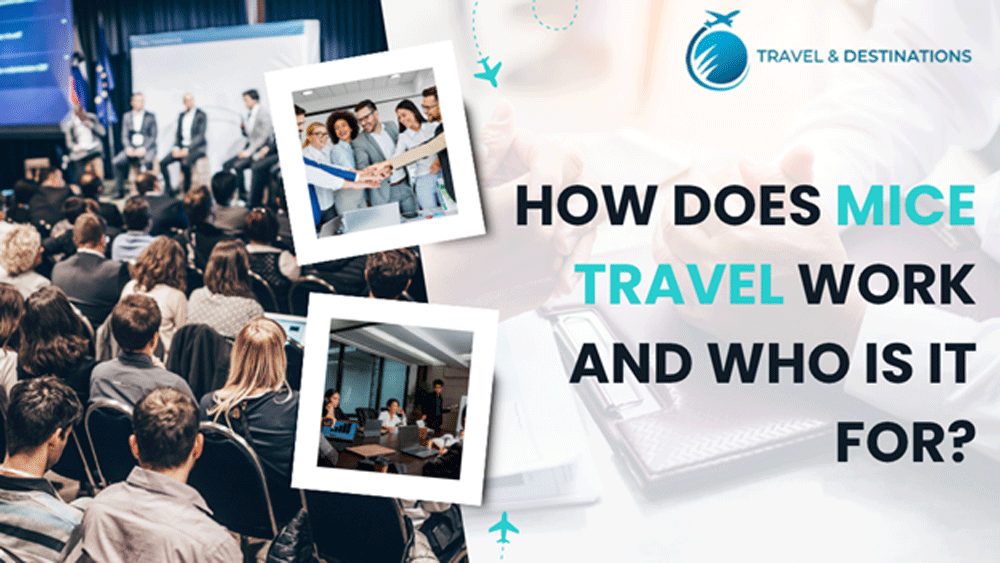
How Does MICE Travel Work and Who Is It For?
What Is MICE Travel?
Nobody in the HR department planned the company offsite, which actually changed things.
It was the sales director. Or the operations head. Someone who understood that putting thirty people in a well-chosen room for two days accomplishes something that thirty weekly video calls across six months cannot — and who had a budget line called MICE to make it happen.
MICE sit awkwardly in most organizations. Finance treats it as an event cost. HR sees it as employee engagement. The travel desk handles the bookings. Nobody owns it properly, which is exactly why it underperforms in most companies and overdelivers in the ones that take it seriously.
Breaking It Down — What M, I, C, E Actually Mean in Practice
Meetings are the category everyone thinks they understand and almost nobody manages well. The venue, the AV setup, the catering, the room layout — these are not administrative details. A strategy session in a properly configured space with working technology and decent food produces different decisions than one squeezed into a hotel ballroom with folding chairs and a projector from 2014. Mice event management exists because this difference is real and measurable.
Incentives are where most CFOs push back, and most sales directors push hardest — and where the sales directors are usually right. A cash bonus disappears into a bank account within a pay cycle. An incentive trip to Bali or Greece stays in the conversation for years. The person who earned it talks about it. The person who almost earned it prepares differently for the next cycle. Mice corporate travel is built around performance incentives, which returns value that a bonus payment simply does not replicate.
Conferences bring a different kind of complexity. Scale, multi-track programming, delegate travel from multiple origins, accommodation blocking across several properties — every element has dependencies on every other element. The moment one vendor slips, the ripple reaches things the organizer did not anticipate. A mice event company that manages conference logistics end-to-end earns its fee in the problems that never surface, rather than the ones it solves after the fact.
Exhibitions are where companies show up to be judged in real time. The booth. The delegate flows. The lead capture. The follow-up that determines whether three days of exhibition investment converts into an actual pipeline. Business travel mice in the exhibition context is less about moving people from A to B and more about creating conditions where commercial conversations happen naturally rather than transactionally.
MICE as a Hotel Industry Term
Hotels that genuinely handle MICE business are operationally different from leisure properties — dedicated event infrastructure, in-house AV teams, group rate structures, catering flexibility across cultural and dietary requirements. A property that looks impressive in photographs but cannot run a hybrid conference properly is not a MICE venue, regardless of its star rating.
Why Companies That Do This Well Outperform Those That Do Not
Distributed teams develop a specific kind of working relationship without in-person time — functional, technically adequate, emotionally thin. Slower to resolve disagreements. Less likely to take risks together. More likely to lose people to competitors who offer something that feels less transactional.
Two days of well-designed mouse corporate travel does more for team cohesion than six months of structured check-ins. The return shows up in retention, collaboration quality, and the speed at which cross-functional decisions actually get made — not in the event budget line.
What Makes MICE Planning Actually Work
Venue geography relative to where delegates are travelling from. Budget spread across accommodation, travel, catering, and programming. Cultural and dietary considerations for mixed groups. Technology for hybrid attendance. Timeline management across vendor relationships that all depend on each other.
Venue geography relative to where delegates are travelling from. Budget spread across accommodation, travel, catering, and programming. Cultural and dietary considerations for mixed groups. Technology for hybrid attendance. Timeline management across vendor relationships that all depend on each other.
About Travel and Destinations
TND handles event management with one specific understanding — Indian organizations are not Western corporate clients with Indian addresses.
Food requirements. Cultural considerations. Flight connectivity from cities that international event platforms treat as secondary markets. Budget structures that reflect how Indian companies actually allocate travel spend.
For companies looking for a mice event company that understands Indian corporate travel company reality rather than approximation, it — TND is where the conversation starts.
FAQs
Recent Posts









Leave a Reply
Your email address will not be published. Required fields are marked
Comments