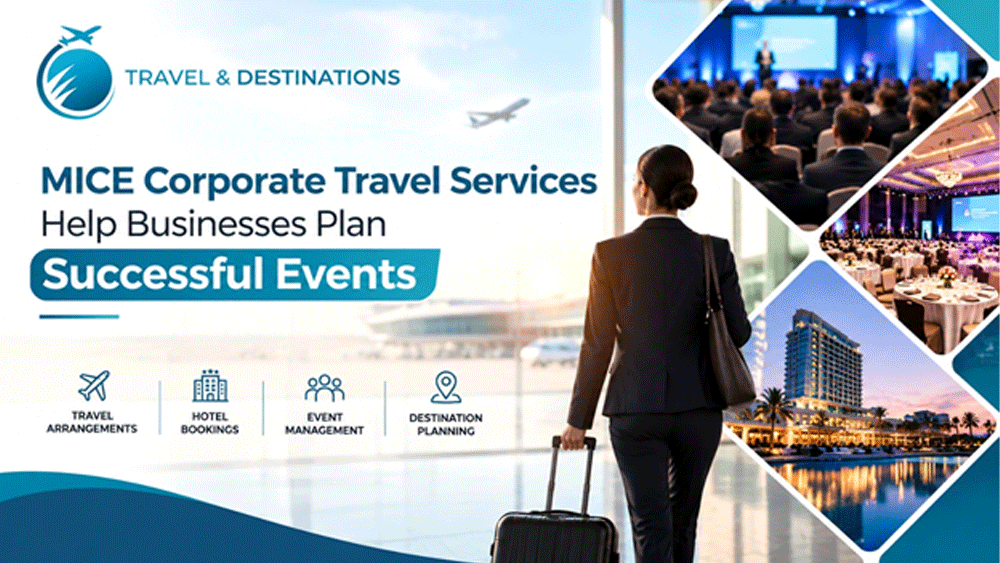
How MICE Corporate Travel Services Help Businesses Plan Successful Events
A 200-person incentive trip to Goa sounds simple until someone has to coordinate flights landing at four different times, three hotel blocks, a gala dinner venue, and a backup plan for the one flight that always gets delayed. That coordination problem, multiplied across conferences, incentive trips, and annual meets, is exactly what MICE corporate travel exists to solve.
Why Corporate MICE Travel Is Important for Modern Businesses
MICE stands for meetings, incentives, conferences, and exhibitions, and it behaves nothing like a routine business trip. A single sales manager flying to a client pitch needs a flight and a hotel room. A 150-person annual sales kickoff needs synchronized arrivals, group hotel blocks that don't fall apart if ten people cancel, transport that actually shows up on time, and a venue booked months in advance before the good dates disappear. Corporate MICE planning gets harder every year as companies run these events more often and expect tighter budgets around them.
TND (Travel and Destinations) has leaned into this specifically, building processes for the parts of group travel that break most often — attendee tracking, last-minute room swaps, and the inevitable person who misses their connection.
What Does a MICE Event Company Handle?
Mostly the parts nobody wants to manage manually. Flight coordination across a large group. Hotel room blocks negotiated at rates individual bookings never get. Ground transport scheduled around actual arrival windows instead of guesswork. Venue sourcing for the meeting or conference itself, plus catering and AV coordination that usually falls through the cracks when it's handled in-house by someone doing this as a side task.
What Services Should You Expect from a MICE Event Company?
Group flight and accommodation booking comes first, obviously. Beyond that, a decent MICE event company should offer on-ground event support during the trip itself, not just planning. Real-time attendee tracking matters too, especially for larger events where someone inevitably gets separated from the group or misses a scheduled pickup. Budget reporting after the event should be straightforward, not something finance has to reconstruct from forty different invoices.
Business Travel MICE: How Does It Work
The process usually starts with scope. How many attendees, what's the destination, what's the budget ceiling? From there it moves into sourcing — venues, hotel blocks, transport vendors — followed by the actual booking phase once everything's confirmed. Business travel MICE work is heaviest in that middle stretch, negotiating rates and locking dates before availability disappears, which happens faster than most planners expect for popular destinations during peak season.
Benefits of Hiring a MICE Event Company
Time savings top the list, though the cost angle matters just as much. Group rates negotiated by an experienced operator tend to beat what an internal team could get on their own, mostly because volume and relationships count for more than most people assume. There's also the disaster-recovery piece. When a flight gets cancelled, or a venue has a last-minute issue, having someone already managing the relationship makes fixing it faster than starting from scratch.
MICE Travel vs Traditional Corporate Travel
Traditional corporate travel is mostly transactional — one traveler, one itinerary, minimal coordination required. MICE travel is closer to running a small logistics operation for a few days. Attendee lists, group contracts, vendor coordination, contingency planning for the parts that inevitably go sideways. The skill set barely overlaps, honestly, which is why most companies eventually hand MICE planning to a specialist rather than stretching their regular travel desk to cover it.
FAQs
Recent Posts











Leave a Reply
Your email address will not be published. Required fields are marked
Comments